

Aerospace inspections have always demanded precision, patience, and clear documentation. Technicians often work in tight spaces inside engines, turbines, and airframes where direct access is not possible. In these environments, seeing a problem is only half the job. Measuring it correctly and recording proof for reports matters just as much.
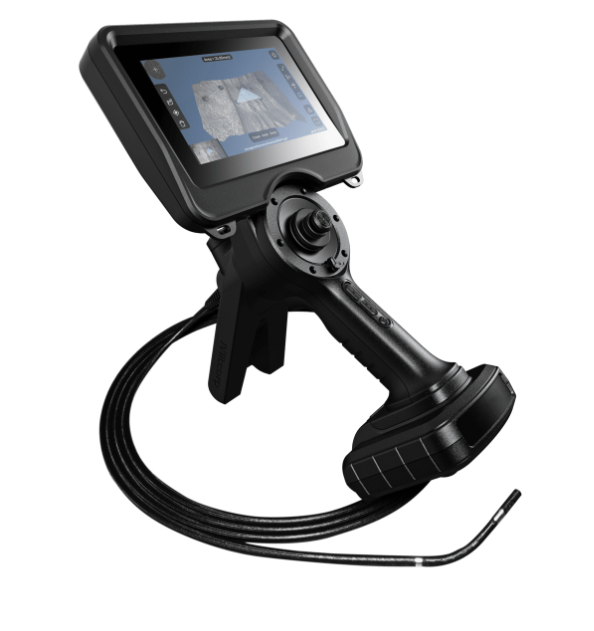
That is where the combination of 3D measurement and digital imaging makes a real difference. When both tools work together in one device, inspections become faster, safer, and more consistent. Equipment like the USA3000J 6 mm dual-view 3D measuring videoscope shows how much smoother this process can be when technology is designed with real inspection work in mind. They focus on giving inspectors clear visuals and reliable measurements without adding extra steps.
Why visual inspection alone is not enough
For years, many inspections relied mainly on visual checks. A technician would guide a scope into a component, find an area of concern, and take a still image. That image helped with reporting, but it did not always answer the big question. How big is the defect?
Cracks, corrosion, dents, and wear marks need accurate sizing. Without measurements, teams often make cautious decisions that can lead to extra downtime. Parts might be removed just to confirm the damage size. That adds labor, cost, and time on the ground for aircraft.
By adding 3D measurement to high-quality imaging, inspectors no longer have to guess. They can capture an image and measure length, depth, or area right on the screen. This means fewer unnecessary removals and faster decisions.
How 3D measurement changes the workflow
Traditional measurement methods in confined spaces can be slow. Some require multiple images from different angles. Others need reference tools or manual estimates. Each extra step increases the chance of error.
A 3D measuring videoscope simplifies this. Using stereo or phase measurement, the system calculates depth and size based on what the camera sees. The inspector positions the probe, selects measurement points on the screen, and the device provides the result.
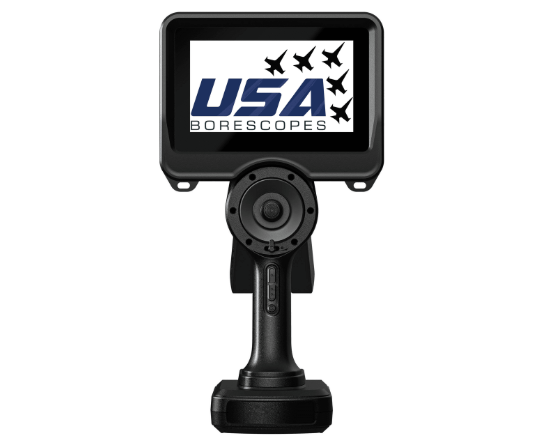
With the USA3000J, the joystick articulation makes positioning the probe tip easier. Instead of struggling to aim the camera, the user can smoothly guide it to the exact area of interest. That control means clearer images and more reliable measurements the first time.
When imaging and measurement happen in one pass, the workflow becomes more direct. Inspect, measure, capture, and move on. There is less back and forth, which helps keep inspection times under control.
Dual view helps inspectors see more
Another feature that improves efficiency is dual-view imaging. The USA3000J offers both forward and side views. This allows inspectors to look straight ahead or turn their attention to walls, blades, or fasteners without removing and reinserting the scope.
In aerospace components, damage is not always directly in front of the probe. It might sit along the side of a combustion chamber or on the edge of a turbine blade. Switching views quickly saves time and reduces the need for repeated insertions.
Fewer insertions also lower the risk of causing accidental damage during the inspection itself. That supports both equipment safety and inspector confidence.
Better documentation with digital imaging
Clear documentation is critical in aerospace maintenance. Every finding must be recorded and often reviewed by engineers, quality teams, or regulators. Blurry or poorly lit images slow this process and can lead to repeated inspections.
High-resolution digital imaging solves this problem. Inspectors can capture sharp photos and videos that show the exact condition of a component. When those visuals include measurement overlays, reports become much stronger.
Instead of writing long descriptions, the technician can include an image with labeled measurements. Everyone reviewing the report can quickly understand the issue. This speeds up approval decisions and repair planning.
Digital files are also easy to store and share. Maintenance teams can build a history of a component over time, comparing images from previous inspections. That helps spot trends like growing cracks or increasing wear.
Reducing repeat work
Repeat inspections waste time and money. They often happen when initial findings are unclear or incomplete. If a measurement is missing or an image does not show enough detail, the aircraft may need to be opened again.
By combining imaging and 3D measurement in one tool, inspectors gather more complete data during the first visit. They do not have to return just to size a defect they already photographed.
This is especially helpful in hard-to-reach areas such as deep engine sections or long fuel lines. Every time access panels are removed, there is added labor and risk. Capturing everything in one session helps avoid that extra work.
Supporting safer inspections
Safety is a top priority in aerospace. That includes both flight safety and the safety of maintenance teams. Efficient tools support both.
When inspections take less time, technicians spend fewer hours in awkward positions or confined spaces. This reduces fatigue, which can lead to mistakes. Easy-to-control articulation, like the joystick on the USA3000J, also reduces strain on hands and wrists during long jobs.
On the aircraft side, accurate measurement helps ensure that only parts that truly need repair or replacement are removed. At the same time, it prevents damaged components from staying in service because their size was underestimated.
Clear images and precise measurements support better maintenance decisions. Better decisions lead to safer aircraft.
Training benefits for new inspectors
Training new inspectors can be challenging. They must learn how to navigate complex components and judge the size and severity of defects. When using tools that combine imaging and measurement, the learning process becomes more visual and concrete.
Trainees can see a defect and immediately measure it. They start to connect what they see with actual numbers. Over time, this builds stronger inspection skills.
Recorded images and videos also serve as training material. Teams can review real examples from past inspections and discuss correct measurement techniques. This shared knowledge improves consistency across the organization.
Adapting to different aerospace applications
Aerospace inspections cover many systems, from engines and auxiliary power units to airframes and control surfaces. A flexible videoscope must handle a range of environments.
A 6 mm diameter probe like the one on the USA3000J is small enough to fit into narrow passages, yet sturdy enough for industrial use. The articulation allows inspectors to steer around corners and obstacles inside complex assemblies.
Because measurement and imaging are built in, the same device can be used across different inspection tasks. This reduces the need to carry multiple tools and simplifies equipment management.
Saving time during maintenance cycles
Aircraft maintenance schedules are tight. Delays can affect flight operations and increase costs. Any tool that helps finish inspections faster without cutting corners adds real value.
When inspectors can see clearly, measure accurately, and document findings on the spot, the entire maintenance cycle moves more smoothly. Engineers receive better data, decisions happen faster, and repairs start sooner.
They design tools like the USA3000J with this goal in mind. They aim to make inspections more efficient while keeping quality high. By putting advanced imaging and 3D measurement in one system, they help maintenance teams work smarter.
A smarter approach to modern inspections
As aircraft systems become more advanced, inspection methods must keep pace. Relying on visual checks alone is no longer enough. Teams need tools that provide clear proof and accurate data in real time.
Integrating 3D measurement with digital imaging creates a more complete inspection process. It reduces guesswork, cuts repeat work, and supports safer decisions. For aerospace professionals, that combination is quickly becoming the standard rather than the exception.
For teams looking to upgrade their inspection capabilities, solutions like the USA3000J show how much smoother daily work can be with the right technology in hand with USA Borescopes. If you want to learn more about how this type of system can support your inspection program, reach out to them.
About the Author
The author is an industry contributor with experience in remote visual inspection technologies and their use in aerospace maintenance and safety programs. They regularly write about inspection tools, non-destructive testing methods, and practical ways teams can improve accuracy, efficiency, and safety during critical maintenance operations across aviation and other high-performance industries.
