

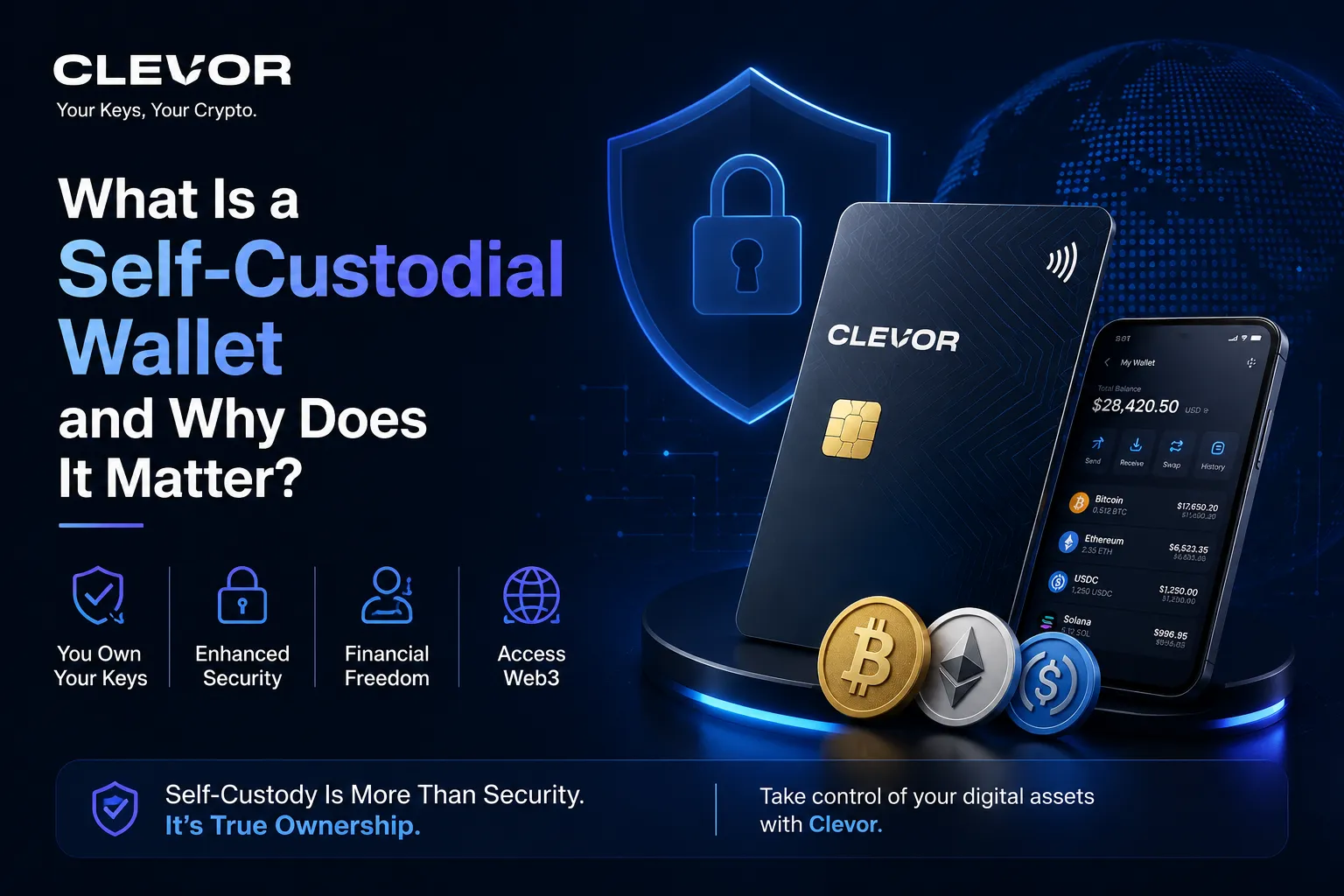
The rapid growth of blockchain technology has given individuals more control over their finances than ever before. However, true ownership of digital assets depends on how those assets are stored. A self-custodial wallet empowers users to hold and manage their own private keys instead of relying on exchanges or third-party providers. This approach aligns with the core philosophy of decentralization by giving users complete authority over their cryptocurrency. Whether you’re investing in Bitcoin, Ethereum, stablecoins, or exploring Web3 applications, understanding how a self-custodial wallet works is essential for protecting your assets, maintaining privacy, and ensuring long-term financial independence.
What Is a Self-Custodial Wallet?
A self-custodial wallet is a type of crypto wallet that allows users to maintain exclusive control of their private keys. Unlike custodial wallets offered by cryptocurrency exchanges, no third party has access to your funds or can authorize transactions on your behalf.
Private keys are cryptographic credentials that prove ownership of digital assets on a blockchain. Whoever controls these keys controls the assets. A self-custodial wallet ensures that only the wallet owner can access, transfer, or manage cryptocurrencies.
This model reflects one of blockchain’s most important principles: removing unnecessary intermediaries while giving users complete ownership of their assets.
How Does a Self-Custodial Wallet Work?
Every crypto wallet uses a pair of cryptographic keys:
-
A public key that generates your wallet address.
-
A private key that authorizes transactions.
When using a self-custodial wallet, your private key remains under your control rather than being stored on centralized servers. Every outgoing transaction is digitally signed using your private key before being broadcast to the blockchain network.
Modern wallet solutions may secure these keys using encrypted storage, secure elements, or hardware-based security to minimize the risk of theft.
Self-Custodial Wallet vs. Custodial Wallet
Understanding the difference between custodial and self-custodial wallets helps users choose the right solution for their needs.
A custodial wallet is managed by an exchange or service provider. Although convenient, users must trust the provider to safeguard their assets and maintain uninterrupted access.
A non-custodial wallet gives users full responsibility for securing their private keys and recovery phrase. While this requires greater personal responsibility, it also delivers complete ownership.
Some key differences include:
-
Full ownership of digital assets.
-
Greater privacy and independence.
-
No reliance on centralized institutions.
-
Direct access to decentralized applications (dApps).
-
Protection from exchange freezes or insolvency.
For anyone seeking long-term control of digital assets, a self-custodial wallet provides significantly greater autonomy.
Why Does a Self-Custodial Wallet Matter?
True Digital Ownership
One of the most well-known principles in cryptocurrency is “Not your keys, not your coins.”
If someone else controls your private keys, they ultimately control access to your assets. A self-custody crypto wallet ensures that ownership stays where it belongs—with you.
This level of independence is particularly valuable during exchange outages, regulatory restrictions, or cybersecurity incidents.
Stronger Security
Centralized exchanges continue to be attractive targets for hackers because they hold billions of dollars in customer assets.
A self-custodial wallet significantly reduces this risk by removing centralized storage of private keys. Since the keys remain under your control, attackers cannot compromise an exchange to gain access to your funds.
When combined with hardware-based protection and secure authentication, self-custody creates multiple layers of defense.
Better Privacy
Many custodial platforms require extensive identity verification and monitor account activity.
Using a self-custodial wallet enables users to interact directly with blockchain networks without giving complete control of their assets or transaction authorization to a centralized provider.
Access to Web3
Decentralized finance (DeFi), NFTs, blockchain gaming, tokenized assets, and decentralized identity platforms all rely on wallet connectivity.
Most Web3 ecosystems are designed to work seamlessly with self-custodial wallets, allowing users to interact directly with smart contracts while maintaining complete ownership of their assets.
Best Practices for Protecting Your Wallet
Self-custody offers greater freedom, but it also requires responsible security practices.
To protect your assets:
-
Store your recovery phrase completely offline.
-
Never share your private keys.
-
Verify wallet addresses before every transaction.
-
Keep wallet firmware and applications updated.
-
Enable strong authentication whenever possible.
-
Avoid phishing websites and fake wallet software.
-
Consider hardware-backed wallet solutions for long-term storage.
A secure crypto wallet that combines hardware protection with user-friendly functionality can greatly reduce common security risks while maintaining full user control.
Why Hardware-Based Self-Custody Is the Future
Software wallets provide convenience, but hardware-backed solutions deliver stronger protection by isolating sensitive cryptographic operations from internet-connected devices.
Smart card technology is taking hardware security even further. Secure elements, similar to those used in banking cards and digital identity solutions, protect private keys against unauthorized access while keeping the wallet compact and portable.
These innovations help users enjoy enterprise-grade security without sacrificing usability, making hardware-assisted self-custody an increasingly attractive choice for both individuals and organizations.
Who Should Use a Self-Custodial Wallet?
A self-custodial wallet is ideal for:
-
Long-term cryptocurrency investors.
-
Active traders seeking better asset control.
-
NFT collectors.
-
DeFi participants.
-
Web3 enthusiasts.
-
Businesses managing digital assets.
-
Security-conscious crypto users.
Anyone who values ownership, privacy, and decentralization can benefit from moving away from fully custodial services.
Looking Ahead
As blockchain adoption continues to accelerate, self-custody will become increasingly important across digital payments, decentralized finance, and digital identity ecosystems. Emerging technologies such as secure smart cards, FIDO2 authentication, and advanced hardware security are making self-custodial wallets more accessible while improving protection against evolving cyber threats.
Solutions built around a non-custodial wallet model are helping redefine how users interact with digital assets by combining security, convenience, and true ownership.
Conclusion
The future of cryptocurrency depends on giving users complete control over their digital assets. A self-custodial wallet allows you to own your private keys, authorize your own transactions, and participate confidently in the expanding Web3 ecosystem without relying on centralized intermediaries. While self-custody requires careful management of recovery phrases and private keys, the benefits—including stronger security, greater privacy, and genuine financial sovereignty—far outweigh the added responsibility. As blockchain technology continues to mature, choosing a trusted self-custodial solution will remain one of the most effective ways to protect your digital assets and embrace the full potential of decentralized finance.
What Is a Self-Custodial Wallet and Why Does It Matter?
The rapid growth of blockchain technology has given individuals more control over their finances than ever before. However, true ownership of digital assets depends on how those assets are stored. A self-custodial wallet empowers users to hold and manage their own private keys instead of relying on exchanges or third-party providers. This approach aligns with the core philosophy of decentralization by giving users complete authority over their cryptocurrency. Whether you’re investing in Bitcoin, Ethereum, stablecoins, or exploring Web3 applications, understanding how a self-custodial wallet works is essential for protecting your assets, maintaining privacy, and ensuring long-term financial independence.
What Is a Self-Custodial Wallet?
A self-custodial wallet is a type of crypto wallet that allows users to maintain exclusive control of their private keys. Unlike custodial wallets offered by cryptocurrency exchanges, no third party has access to your funds or can authorize transactions on your behalf.
Private keys are cryptographic credentials that prove ownership of digital assets on a blockchain. Whoever controls these keys controls the assets. A self-custodial wallet ensures that only the wallet owner can access, transfer, or manage cryptocurrencies.
This model reflects one of blockchain’s most important principles: removing unnecessary intermediaries while giving users complete ownership of their assets.
How Does a Self-Custodial Wallet Work?
Every crypto wallet uses a pair of cryptographic keys:
-
A public key that generates your wallet address.
-
A private key that authorizes transactions.
When using a self-custodial wallet, your private key remains under your control rather than being stored on centralized servers. Every outgoing transaction is digitally signed using your private key before being broadcast to the blockchain network.
Modern wallet solutions may secure these keys using encrypted storage, secure elements, or hardware-based security to minimize the risk of theft.
Self-Custodial Wallet vs. Custodial Wallet
Understanding the difference between custodial and self-custodial wallets helps users choose the right solution for their needs.
A custodial wallet is managed by an exchange or service provider. Although convenient, users must trust the provider to safeguard their assets and maintain uninterrupted access.
A non-custodial wallet gives users full responsibility for securing their private keys and recovery phrase. While this requires greater personal responsibility, it also delivers complete ownership.
Some key differences include:
-
Full ownership of digital assets.
-
Greater privacy and independence.
-
No reliance on centralized institutions.
-
Direct access to decentralized applications (dApps).
-
Protection from exchange freezes or insolvency.
For anyone seeking long-term control of digital assets, a self-custodial wallet provides significantly greater autonomy.
Why Does a Self-Custodial Wallet Matter?
True Digital Ownership
One of the most well-known principles in cryptocurrency is “Not your keys, not your coins.”
If someone else controls your private keys, they ultimately control access to your assets. A self-custody crypto wallet ensures that ownership stays where it belongs—with you.
This level of independence is particularly valuable during exchange outages, regulatory restrictions, or cybersecurity incidents.
Stronger Security
Centralized exchanges continue to be attractive targets for hackers because they hold billions of dollars in customer assets.
A self-custodial wallet significantly reduces this risk by removing centralized storage of private keys. Since the keys remain under your control, attackers cannot compromise an exchange to gain access to your funds.
When combined with hardware-based protection and secure authentication, self-custody creates multiple layers of defense.
Better Privacy
Many custodial platforms require extensive identity verification and monitor account activity.
Using a self-custodial wallet enables users to interact directly with blockchain networks without giving complete control of their assets or transaction authorization to a centralized provider.
Access to Web3
Decentralized finance (DeFi), NFTs, blockchain gaming, tokenized assets, and decentralized identity platforms all rely on wallet connectivity.
Most Web3 ecosystems are designed to work seamlessly with self-custodial wallets, allowing users to interact directly with smart contracts while maintaining complete ownership of their assets.
Best Practices for Protecting Your Wallet
Self-custody offers greater freedom, but it also requires responsible security practices.
To protect your assets:
-
Store your recovery phrase completely offline.
-
Never share your private keys.
-
Verify wallet addresses before every transaction.
-
Keep wallet firmware and applications updated.
-
Enable strong authentication whenever possible.
-
Avoid phishing websites and fake wallet software.
-
Consider hardware-backed wallet solutions for long-term storage.
A secure crypto wallet that combines hardware protection with user-friendly functionality can greatly reduce common security risks while maintaining full user control.
Why Hardware-Based Self-Custody Is the Future
Software wallets provide convenience, but hardware-backed solutions deliver stronger protection by isolating sensitive cryptographic operations from internet-connected devices.
Smart card technology is taking hardware security even further. Secure elements, similar to those used in banking cards and digital identity solutions, protect private keys against unauthorized access while keeping the wallet compact and portable.
These innovations help users enjoy enterprise-grade security without sacrificing usability, making hardware-assisted self-custody an increasingly attractive choice for both individuals and organizations.
Who Should Use a Self-Custodial Wallet?
A self-custodial wallet is ideal for:
-
Long-term cryptocurrency investors.
-
Active traders seeking better asset control.
-
NFT collectors.
-
DeFi participants.
-
Web3 enthusiasts.
-
Businesses managing digital assets.
-
Security-conscious crypto users.
Anyone who values ownership, privacy, and decentralization can benefit from moving away from fully custodial services.
Looking Ahead
As blockchain adoption continues to accelerate, self-custody will become increasingly important across digital payments, decentralized finance, and digital identity ecosystems. Emerging technologies such as secure smart cards, FIDO2 authentication, and advanced hardware security are making self-custodial wallets more accessible while improving protection against evolving cyber threats.
Solutions built around a non-custodial wallet model are helping redefine how users interact with digital assets by combining security, convenience, and true ownership.
Conclusion
The future of cryptocurrency depends on giving users complete control over their digital assets. A self-custodial wallet allows you to own your private keys, authorize your own transactions, and participate confidently in the expanding Web3 ecosystem without relying on centralized intermediaries. While self-custody requires careful management of recovery phrases and private keys, the benefits—including stronger security, greater privacy, and genuine financial sovereignty—far outweigh the added responsibility. As blockchain technology continues to mature, choosing a trusted self-custodial solution will remain one of the most effective ways to protect your digital assets and embrace the full potential of decentralized finance.