

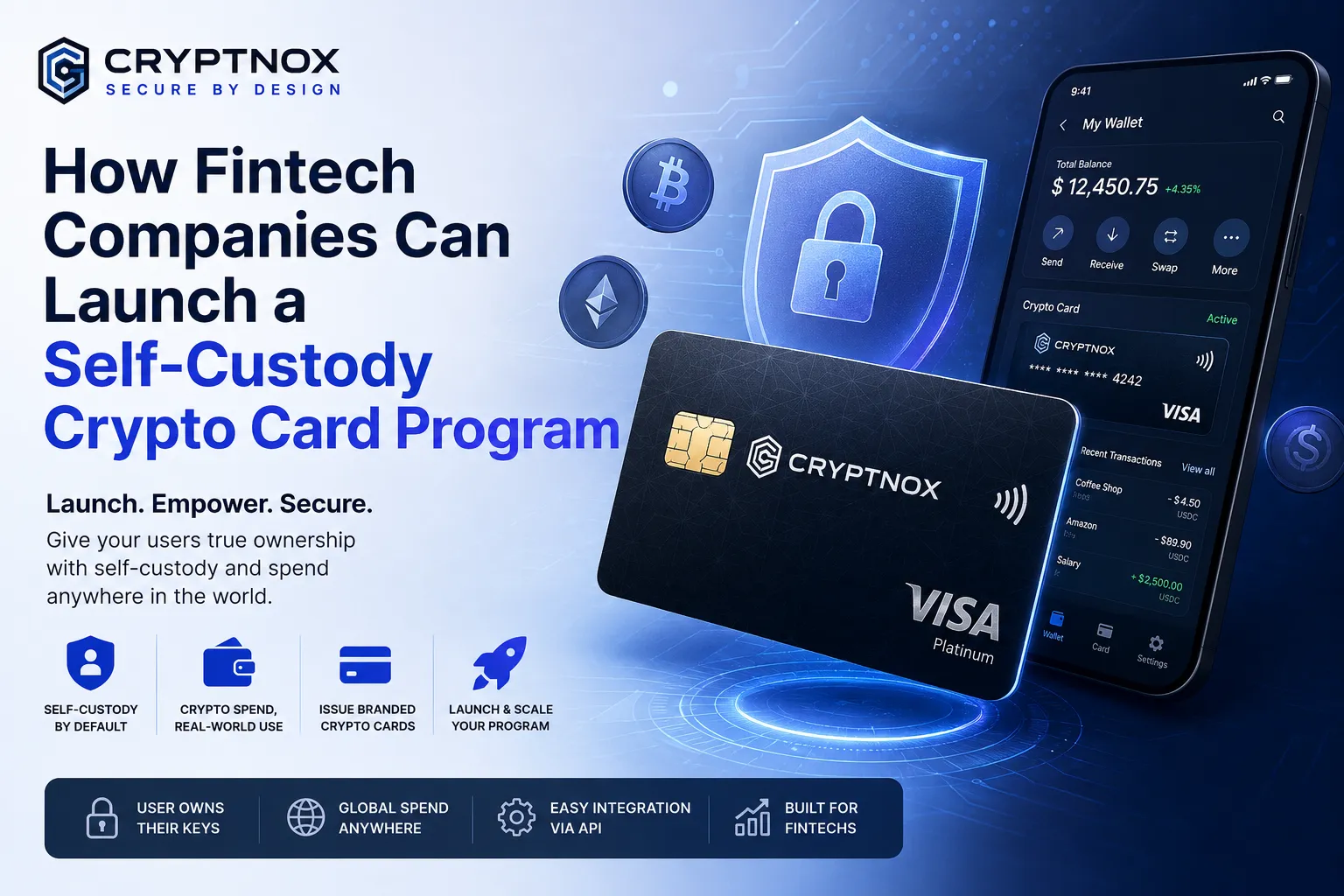
The rapid adoption of digital assets has created new opportunities for fintech companies to offer innovative financial products. While many crypto payment solutions still rely on custodial models, growing demand for user-controlled asset management has accelerated interest in self-custody solutions. Consumers increasingly expect secure, compliant, and easy-to-use products that allow them to retain ownership of their digital assets without depending entirely on centralized custodians.
For fintechs looking to differentiate themselves, launching a Self-custody crypto card platform offers a compelling opportunity. By combining secure hardware, blockchain wallet infrastructure, and scalable card issuance technology, businesses can introduce next-generation crypto card programs while maintaining flexibility for future growth.
Why Self-Custody Is Becoming a Competitive Advantage
Self-custody has become one of the defining principles of blockchain technology. Instead of entrusting private keys to third-party providers, users maintain direct ownership of their digital assets.
For fintech companies, offering self-custody products delivers several benefits:
-
Greater customer trust
-
Improved digital asset ownership
-
Reduced dependency on custodial infrastructure
-
Enhanced security architecture
-
Stronger differentiation in competitive markets
A well-designed self-custody program empowers customers while enabling fintechs to deliver innovative Web3 financial services.
Building a Self-Custody Crypto Card Program
Launching a crypto card solution involves much more than issuing payment cards. A complete platform requires secure wallet infrastructure, hardware provisioning, lifecycle management, and seamless integration with blockchain services.
A scalable Card Wallet as a Service platform simplifies this process by providing fintech companies with the technology needed to launch branded hardware wallet card programs without building every component from scratch.
Core components typically include:
-
Secure hardware wallet cards
-
Blockchain wallet integration
-
Card lifecycle management
-
API-driven platform connectivity
-
Secure credential provisioning
-
Enterprise-grade security controls
This modular approach significantly reduces development complexity while accelerating product innovation.
Why Card Wallet as a Service Matters
Developing proprietary hardware wallet infrastructure requires significant investment in hardware engineering, cryptography, manufacturing, and security certification.
Using a Card Wallet as a Service model allows fintech companies to focus on customer experience while leveraging proven wallet infrastructure.
Advantages include:
-
Faster product development
-
Reduced engineering costs
-
Scalable deployment
-
Flexible white-label branding
-
Enterprise-ready security architecture
Rather than reinventing wallet technology, fintechs can concentrate on delivering value-added financial services.
Blockchain Wallet Infrastructure
Every self-custody solution depends on secure blockchain wallet technology capable of protecting private keys throughout the wallet lifecycle.
A robust Blockchain wallet infrastructure enables secure key generation, cryptographic operations, transaction authorization, and long-term asset protection.
Important capabilities include:
-
Secure key management
-
Multi-blockchain compatibility
-
Cryptographic signing
-
Hardware-backed credential protection
-
Secure wallet provisioning
This infrastructure forms the technical foundation of any successful self-custody card program.
Secure Key Injection for Institutional Security
One of the most critical stages of hardware wallet production is secure key injection. During this process, cryptographic credentials are generated and securely embedded into the hardware under tightly controlled conditions.
Proper secure key injection helps protect against:
-
Credential theft
-
Unauthorized duplication
-
Supply chain compromise
-
Hardware tampering
-
Manufacturing vulnerabilities
Fintech companies evaluating wallet platforms should carefully consider providers that utilize patented approaches for secure credential provisioning and institutional hardware security.
Why Hardware Security Matters
Unlike software wallets that operate on internet-connected devices, hardware-backed wallet cards isolate private keys within secure elements specifically designed to resist physical and digital attacks.
This architecture provides stronger protection against:
-
Malware
-
Phishing attacks
-
Device compromise
-
Remote credential extraction
-
Unauthorized access
Hardware-backed security gives fintech companies greater confidence when delivering digital asset services to retail and institutional customers alike.
White-Label Opportunities for Fintech Companies
White-label solutions allow fintech organizations to launch branded wallet card products without building hardware manufacturing capabilities internally.
Benefits include:
-
Faster market entry
-
Lower infrastructure costs
-
Brand customization
-
Scalable deployment
-
Simplified maintenance
A white-label approach enables companies to deliver differentiated customer experiences while leveraging proven wallet technology behind the scenes.
This model is particularly attractive for:
-
Digital banks
-
Crypto exchanges
-
Payment providers
-
Wealth management platforms
-
Embedded finance companies
The Role of Patented Innovation
As hardware wallet technology evolves, intellectual property continues to shape the future of institutional digital asset security.
Innovations covering secure wallet issuance, credential provisioning, and manufacturing processes help strengthen both operational security and long-term scalability.
Organizations evaluating enterprise wallet platforms should consider providers investing in patented technologies that enhance hardware security while supporting institutional deployment requirements.
Planning for Long-Term Growth
Launching a self-custody crypto card program should be viewed as a long-term strategic investment rather than a short-term product launch.
Successful fintech implementations typically prioritize:
-
Scalable wallet infrastructure
-
Enterprise security
-
Flexible API integration
-
Hardware lifecycle management
-
Future blockchain compatibility
Building on a secure foundation today enables organizations to expand digital asset services as customer demand continues to grow.
Conclusion
The demand for secure, user-controlled digital asset solutions is reshaping the fintech landscape. By adopting a Self-custody crypto card platform, companies can offer customers greater ownership, stronger security, and a more transparent digital asset experience.
Leveraging solutions such as Card Wallet as a Service and enterprise-grade Blockchain wallet infrastructure enables fintech organizations to accelerate product development while reducing technical complexity. Combined with patented innovations in secure hardware wallet issuance and key provisioning, these technologies provide a scalable foundation for the next generation of digital finance and self-custody solutions.