

In food delivery, freshness is everything. Customers may forgive delays, but they rarely forgive food that arrives cold, soggy, or compromised.
Yet many delivery operations still rely on basic solutions to maintain quality during transit. This raises a critical question: What actually works better — a smart delivery system or a traditional insulated bag?
The comparison of smart delivery box vs insulated bag is not just about packaging. It is about consistency, customer experience, and long-term business performance.
Why Food Freshness Breaks Down in Delivery
Before comparing solutions, it is important to understand why food loses quality in the first place. The last mile is the most vulnerable stage in delivery. Once food leaves the kitchen, it is exposed to external conditions that are difficult to control.
Heat escapes, cold items warm up, and moisture builds inside containers. These changes affect taste, texture, and overall experience.
This is where food delivery heat retention becomes a key factor. If temperature is not maintained properly, even the best prepared food can feel disappointing.
What Insulated Bags Actually Do
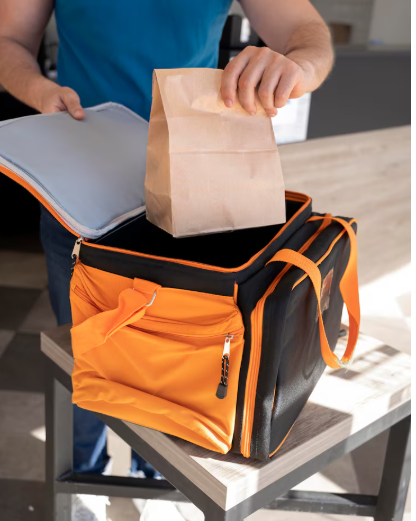
Insulated bags have been the standard for years. They are simple, lightweight, and cost effective. They are designed to slow down temperature loss by creating a barrier between the food and the external environment.
However, their function is limited. They do not generate or maintain temperature. They only delay change. In the discussion of thermal bags vs delivery box, this limitation becomes important. Insulated bags depend heavily on delivery speed and external conditions to perform well.
When everything goes right, they can be effective. But when conditions change, their performance drops quickly.
Where Insulated Bags Fall Short
While insulated bags are widely used, they come with several operational limitations that affect consistency.
The key challenges include:
-
No active temperature control during transit
-
Heat loss or gain depending on weather conditions
-
Frequent temperature drops when the bag is opened
-
Inability to separate hot and cold items effectively
-
Performance that depends heavily on delivery time
These limitations create variability. Two orders from the same kitchen can arrive with completely different quality depending on how they were handled.
What Smart Delivery Boxes Bring to the Table
Smart delivery boxes represent a shift from passive storage to active control. Instead of slowing down temperature change, they are designed to maintain it. This makes them more reliable across different delivery conditions.
When comparing smart delivery box vs insulated bag, the difference lies in how each system handles temperature. Smart systems focus on stability, not just insulation.
They create a controlled environment that protects food quality throughout the journey, regardless of distance or external factors.
How Smart Delivery Boxes Improve Food Quality
The advantages of smart delivery boxes are not limited to temperature alone. They improve the entire delivery experience.
Key benefits include:
-
Active temperature control that maintains consistent conditions
-
Separate compartments for hot and cold items
-
Reduced impact of external weather conditions
-
Better retention of taste, texture, and freshness
-
Consistent performance across multiple deliveries
These capabilities ensure that food arrives closer to how it was prepared, which directly improves customer satisfaction.
The Sustainability Perspective
Sustainability is becoming an important factor in delivery operations. Businesses are under increasing pressure to reduce waste and operate more efficiently. At first glance, insulated bags may seem more sustainable because they are simple and widely used. However, the bigger picture tells a different story.
Poor temperature control leads to:
-
Food waste
-
Replacements and re deliveries
-
Increased resource consumption
In contrast, smarter systems help reduce these inefficiencies by maintaining product quality more reliably.
This makes the conversation about best food delivery packaging more complex. It is not just about materials, but about outcomes. A system that prevents waste and improves efficiency can have a stronger long term sustainability impact.
Consistency Is the Real Differentiator
The biggest difference between insulated bags and smart delivery boxes is consistency. Insulated bags can work under ideal conditions, but they struggle to deliver predictable results at scale.
Smart delivery boxes, on the other hand, are designed for consistency. They reduce dependency on external factors and create a more controlled delivery process.
For businesses, this consistency translates into:
-
Fewer complaints
-
Better reviews
-
Higher repeat orders
-
Stronger brand trust
In a competitive market, consistency is often what separates average operations from high performing ones.
What Businesses Should Consider
Choosing between these two systems is not just a cost decision. It is a strategic decision that affects growth and customer experience.
Businesses should evaluate:
-
The importance of consistent food quality in their brand positioning
-
The scale of their delivery operations
-
The types of food they deliver and their sensitivity to temperature
-
The long-term cost of refunds, waste, and lost customers
-
The need for operational efficiency and scalability
When these factors are considered together, the value of better infrastructure becomes clearer.
Final Thought
The debate around smart delivery box vs insulated bag is not just about tools. It is about how seriously a business takes delivery quality. As customer expectations rise, maintaining food freshness is no longer optional. It is a core part of the brand experience.
Traditional insulated bags have served their purpose, but they were never designed for the complexity of modern delivery systems. Smart delivery solutions represent a more reliable and scalable approach.
Because in the end, freshness is not just about how food is made. It is about how well it is delivered.